A good DSLR camera remains one of the smartest investments for photographers who value image quality, reliability, and creative control. While mirrorless systems dominate headlines, DSLRs continue to prove their worth through excellent battery life, comfortable ergonomics, extensive lens ecosystems, and dependable performance in real-world shooting conditions.
For beginners, hobbyists, and even professionals, choosing a good DSLR camera is often less about following trends and more about getting a tool that consistently produces sharp images, natural colors, and dependable results. The combination of optical viewfinders, proven autofocus systems, and mature lens selections creates an experience many photographers still prefer. When photography matters, proven technology often beats flashy marketing.
How a Good DSLR Camera Improves Photography Skills
A good DSLR camera encourages photographers to understand exposure, composition, and lighting at a deeper level. Unlike smartphone photography, where much of the process happens automatically behind the scenes, a DSLR gives direct control over shutter speed, aperture, and ISO settings. This hands-on approach builds technical knowledge and creative confidence.
The larger APS-C or full-frame sensors found in many DSLR models capture significantly more detail than typical mobile devices. Images show better dynamic range, cleaner shadows, richer colors, and improved low-light performance. Portraits gain smoother background blur, while landscapes retain intricate textures across the frame.
Another major advantage is lens flexibility. A photographer can switch from a wide-angle lens for architecture to a telephoto lens for wildlife within seconds. That adaptability transforms a camera from a simple device into a complete creative system.
New photographers often discover that learning with a DSLR accelerates skill development because every adjustment has a visible impact on the final image. Understanding depth of field, motion blur, and exposure compensation becomes practical rather than theoretical.
For anyone taking their first serious step into photography, exploring a dedicated guide on DSLR cameras for beginners can provide a strong foundation before making a purchase decision.
Best Features to Look for in a Good DSLR Camera
The definition of a good DSLR camera extends beyond megapixels. Image quality depends on a combination of sensor performance, autofocus accuracy, lens quality, and overall usability.
A responsive autofocus system remains one of the most valuable features. Whether capturing fast-moving sports, energetic children, or wildlife in motion, accurate focus determines whether a photograph succeeds or fails. Many modern DSLR cameras offer advanced tracking modes that maintain focus on moving subjects with remarkable consistency.
Battery life is another area where DSLRs continue to excel. Many models can capture well over one thousand images on a single charge. For travelers, event photographers, and outdoor enthusiasts, this endurance reduces interruptions and eliminates constant battery management.
Build quality also deserves attention. A comfortable grip, intuitive controls, and weather-resistant construction contribute to a better shooting experience. Cameras that feel natural in hand encourage longer shooting sessions and greater creative exploration.
Image stabilization, dual card slots, high-resolution sensors, and fast burst shooting speeds add further value depending on individual needs. However, the most expensive specification sheet doesn’t automatically create the best camera. Practical usability often matters more than technical extremes.
Among entry-level choices, the Nikon D3200 DSLR camera review demonstrates how an older model can still deliver impressive image quality for budget-conscious photographers.
Good DSLR Camera Options That Still Make Sense Today
Despite rapid technological changes, several DSLR models remain highly competitive for photography enthusiasts. Cameras from Canon and Nikon continue attracting buyers because of their extensive lens support and proven reliability.
Canon’s DSLR lineup remains particularly appealing due to its balance between performance and accessibility. Entry-level photographers benefit from user-friendly controls and excellent color science, while advanced users gain access to a mature ecosystem of lenses and accessories.
The Canon EOS Rebel T6i DSLR camera review highlights why this model continues to attract photographers looking for capable performance without stretching their budget.
Canon’s broader DSLR catalog also demonstrates remarkable longevity. Many photographers continue using cameras purchased years ago because image quality remains highly competitive for portraits, travel photography, family events, and content creation.
Readers interested in a deeper comparison can explore comprehensive Canon DSLR camera reviews that examine how these cameras perform in today’s increasingly mirrorless market.
The enduring popularity of the system becomes even more understandable when examining why Canon DSLR cameras still dominate photography for many dedicated enthusiasts and working photographers.
For photographers ready to upgrade their gear, this highly rated DSLR camera option offers a practical combination of image quality, versatility, and long-term value.
FAQ DSLR Camera Buying Guide
1. Is a DSLR camera still worth buying in 2026?
Absolutely. A DSLR camera remains an excellent choice for photographers who prioritize image quality, battery life, lens selection, and ergonomic handling. While mirrorless cameras continue to gain market share, DSLRs offer mature ecosystems, reliable autofocus systems, and exceptional value for money. Many professional photographers still use DSLR equipment because it performs consistently in demanding situations. For beginners and enthusiasts, a DSLR often provides more features per dollar than comparable mirrorless alternatives, making it a practical investment for learning and long-term photography growth.
2. What makes a good DSLR camera for beginners?
A good beginner DSLR combines ease of use with room for future growth. Features such as guided shooting modes, intuitive controls, accurate autofocus, and strong image quality help new photographers build confidence quickly. A camera should also support interchangeable lenses, allowing users to expand their creative options over time. Battery life, comfortable ergonomics, and access to affordable accessories are equally important. Rather than focusing solely on megapixels, beginners benefit more from choosing a camera that encourages learning and consistent practice.
3. Should I buy a new DSLR camera or a used one?
Both options can be excellent depending on the budget and goals. New DSLR cameras provide manufacturer warranties, updated features, and peace of mind. Used models, however, often deliver exceptional value because DSLR technology has matured significantly over the years. Many older cameras continue to produce professional-quality images and remain compatible with modern lenses. Before purchasing a used DSLR, buyers should inspect shutter count, sensor condition, autofocus performance, and overall physical wear. A well-maintained used DSLR can often outperform a newer entry-level alternative at the same price point.
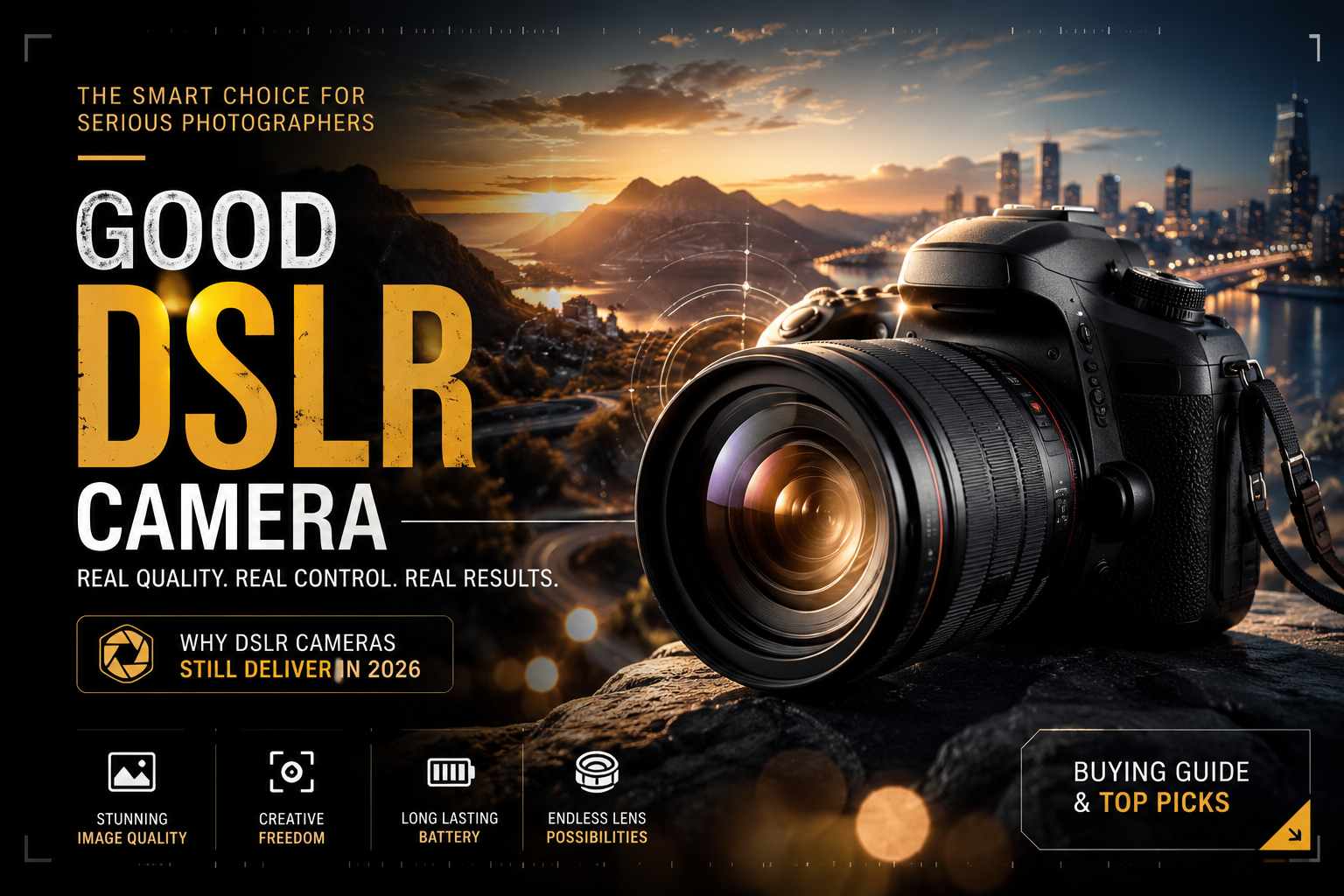
A good DSLR camera is more than a collection of specifications. It is a dependable, creative tool capable of producing beautiful photographs year after year. Strong battery life, extensive lens compatibility, excellent image quality, and proven reliability continue to make DSLRs relevant in 2026.
Technology evolves quickly, but great photography depends on vision, technique, and consistency. A capable DSLR provides all three ingredients by giving photographers the control and confidence needed to capture moments exactly as they imagine them. Whether you’re purchasing your first camera or expanding an existing kit, a thoughtfully chosen DSLR remains a powerful companion for creative growth.