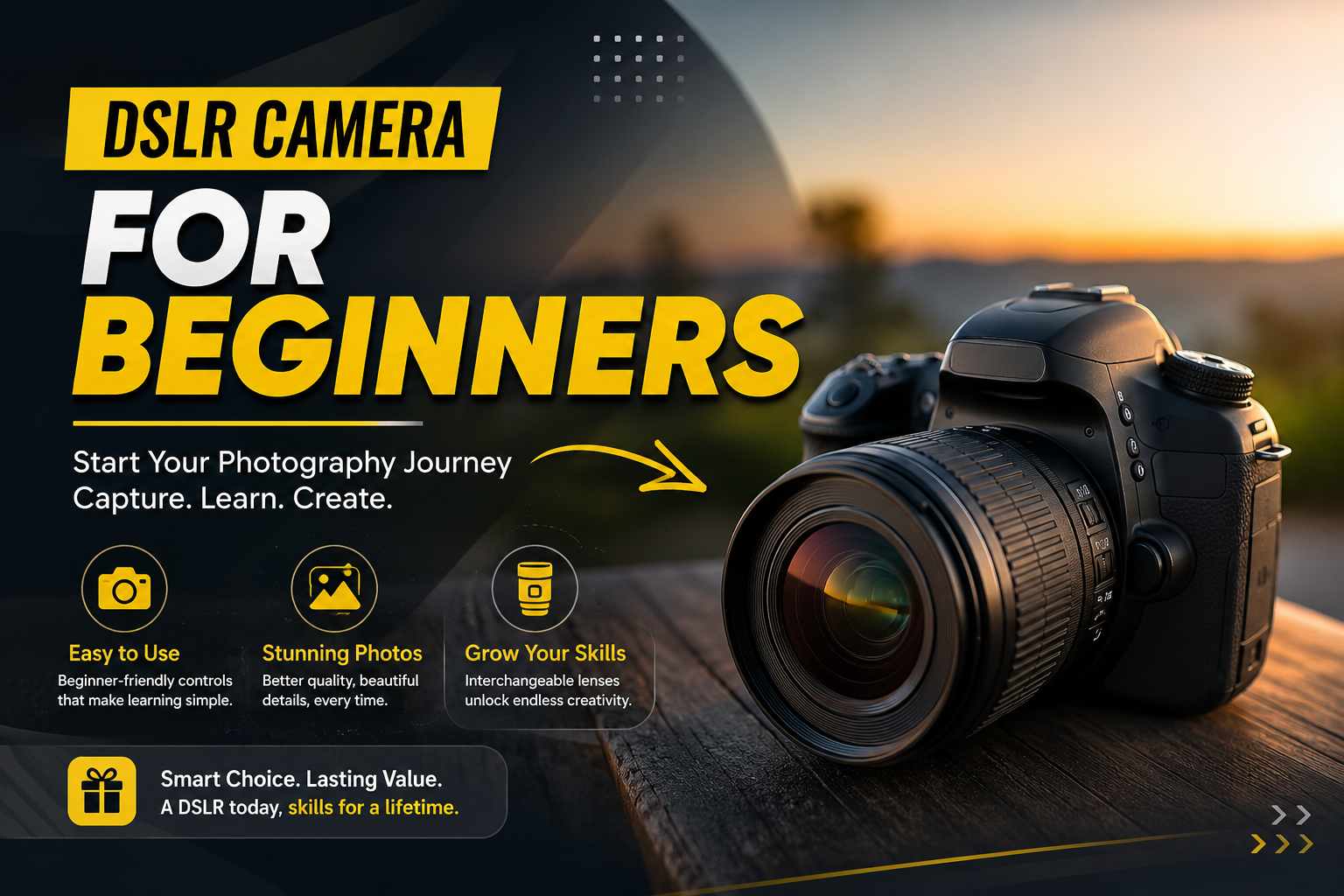
A great photo doesn’t always come from expensive gear. More often, it comes from timing, light, perspective, and the confidence to press the shutter at the right moment. That’s exactly why many new photographers still gravitate toward a DSLR camera for beginners instead of relying only on smartphones. A beginner DSLR gives room to grow, delivers stronger image quality, and teaches the fundamentals of real photography without feeling overly complicated.
The first experience with a DSLR can feel exciting and intimidating at the same time. Rows of buttons, interchangeable lenses, manual controls, and endless camera specs often make beginners second-guess their choice. Yet once the basics click, the difference becomes obvious. Images look sharper, backgrounds become beautifully blurred, and low-light shots finally stop looking muddy and flat.
Photography trends continue to evolve quickly, but DSLR cameras still hold a strong position for beginners who want reliability, battery life, lens flexibility, and practical hands-on learning. Mirrorless cameras may dominate conversations online, yet DSLR systems remain one of the most affordable and beginner-friendly ways to enter serious photography.
Why DSLR Camera For Beginners Still Makes Sense
A beginner DSLR camera teaches photography in a way smartphones simply can’t. Manual exposure control, optical viewfinders, fast autofocus, and interchangeable lenses help new photographers understand how light and composition actually work. Instead of depending entirely on software processing, beginners learn how to create images intentionally.
Another reason DSLRs continue to attract new users is value. Many entry-level DSLR cameras cost far less than flagship smartphones while delivering noticeably better image quality. A camera like the Canon EOS Rebel series or Nikon D3000 lineup still produces excellent photos for portraits, travel, food photography, and even beginner content creation.
Comfort also matters. DSLRs tend to have deeper grips and intuitive layouts that feel stable in the hands. Beginners often discover that holding a real camera changes how they approach photography. It slows the process down in a good way, making each shot more thoughtful and deliberate.
Anyone searching for a balanced entry point should also explore this guide about the best beginner DSLR camera for confident photography, especially when comparing beginner-friendly features and long-term usability.
Best DSLR Features Beginners Should Prioritize
Megapixels grab attention, but they rarely determine whether a beginner camera feels enjoyable to use. Ease of operation matters more. A beginner DSLR should have simple menu navigation, reliable autofocus, comfortable ergonomics, and good battery life.
An APS-C sensor is usually the sweet spot for beginners because it balances image quality and affordability. Cameras in this category perform well in daylight and handle low-light situations far better than most phones. Pairing an APS-C DSLR with a basic 50mm lens instantly creates cleaner portraits with natural depth and background separation.
Lens availability is another huge advantage. Beginners can start with a kit lens, then gradually upgrade as skills improve. Wide-angle lenses for landscapes, telephoto lenses for sports, and prime lenses for portraits all become accessible without replacing the camera body itself.
WiFi capability has also become surprisingly important. Many new photographers want to transfer photos directly to their phones for editing or social sharing. A modern DSLR camera with WiFi integration makes that process smooth without sacrificing image quality.
Budget-conscious buyers often underestimate how many strong DSLR options still exist under moderate price ranges. This breakdown of reasonably priced DSLR cameras for serious photography highlights why spending wisely matters more than chasing premium specs.
How Beginners Can Learn Photography Faster With a DSLR
Owning a DSLR alone won’t magically improve photography skills. The real progress comes from understanding exposure, composition, and consistency. Fortunately, DSLR cameras make that learning process more visible and interactive.
Beginners should start by learning the exposure triangle: shutter speed, aperture, and ISO. Once those three concepts make sense, photography becomes dramatically easier. Aperture controls background blur, shutter speed controls motion, and ISO affects brightness and image noise. Small adjustments create entirely different moods and visual styles.
Practice matters more than gear obsession. Many beginners waste time comparing camera models instead of shooting regularly. A modest DSLR used every day will outperform an expensive camera sitting untouched on a shelf.
Natural lighting is another secret weapon. Early morning and late afternoon light produce softer shadows and richer tones that instantly improve beginner photography. Even basic cameras can produce stunning results during golden hour.
Editing should stay simple in the beginning. Overprocessed images often look artificial and distracting. Learning composition and lighting first creates stronger results than relying heavily on filters later.
For buyers working within a strict budget, these insights on the best DSLR cameras under $500 that are still worth buying show that affordable cameras can still produce professional-looking photos when used properly.
Another helpful resource worth checking is this complete guide on choosing the best DSLR camera for beginner photographers, especially for first-time buyers trying to avoid common mistakes.
FAQ DSLR Camera For Beginners
- Is a DSLR camera still worth buying for beginners?
Absolutely. DSLR cameras still offer excellent value for beginners because they combine strong image quality, reliable battery life, and access to affordable lenses. Many entry-level DSLR models cost less than high-end smartphones while delivering far better control over photography settings. Beginners also benefit from learning manual photography techniques that improve long-term skills instead of depending entirely on automated phone processing. - What is the best DSLR camera for beginners with a low budget?
Several affordable DSLR cameras remain excellent choices for beginners, especially older Canon and Nikon entry-level models. Cameras like the Canon EOS Rebel T7 or Nikon D3500 continue to perform well for portraits, travel, and daily photography. A low-budget DSLR paired with a quality prime lens often creates better images than spending more money on advanced features that beginners may never use during their first year of learning. - Should beginners choose DSLR or mirrorless cameras?
Both camera types have advantages, but DSLR cameras often feel more beginner-friendly because of their comfortable grip, longer battery life, and lower overall system cost. Mirrorless cameras are compact and modern, but many beginner photographers appreciate the straightforward handling and optical viewfinder experience found in DSLR systems. The better choice usually depends on budget, comfort, and how serious the user plans to become about photography over time.
A DSLR camera for beginners isn’t just about owning better equipment. It’s about stepping into photography with intention. The tactile feel of adjusting settings, changing lenses, and capturing moments manually creates a stronger connection to the craft itself. That experience teaches patience, observation, and creativity in ways automated devices rarely can.
For beginners who genuinely want to improve their photography skills, a DSLR remains one of the smartest and most rewarding starting points available today.