In 2026, searching for the best DSLR cameras under $500 raises an important question: are budget DSLRs still worth buying today? With mirrorless cameras and smartphone photography evolving rapidly, many beginners wonder if an affordable DSLR still makes sense—or if it’s already outdated.
The short answer is yes, DSLR cameras under $500 are still relevant in 2026—but only if you understand their strengths, limits, and who they are truly for. This guide breaks down the current reality of budget DSLRs, what you should realistically expect, and which models remain smart choices for beginners and hobbyists.
The DSLR Market Reality in 2026
The camera industry has shifted heavily toward mirrorless systems. Major brands now focus their innovation on mirrorless lines, while entry-level DSLRs receive fewer updates. However, this shift has created a unique advantage for budget buyers.
Because DSLR technology has matured, many models under $500 offer stable performance, proven sensors, and refined image processing. These cameras may not be new releases, but they remain reliable tools for learning photography fundamentals and producing high-quality images.
In other words, budget DSLRs in 2026 aren’t cutting-edge—but they are dependable.
Why DSLR Cameras Under $500 Still Make Sense in 2026
Despite changing trends, DSLR cameras under $500 continue to attract new photographers for several reasons.
First, image quality is still strong. APS-C sensors used in entry-level DSLRs can produce sharp photos with accurate colors and good dynamic range, especially in daylight and controlled lighting.
Second, battery life remains superior. Optical viewfinders consume far less power than electronic screens, making DSLRs ideal for long shooting sessions without frequent charging.
Third, learning photography is easier. Physical controls, optical viewfinders, and clear menu systems help beginners understand exposure, focus, and composition more intuitively than touchscreen-heavy systems.
Lastly, lens ecosystems are massive and affordable. Used DSLR lenses are widely available in 2026, making long-term upgrades much cheaper.
What to Look for in the Best DSLR Cameras Under $500 (2026 Edition)
When choosing a DSLR in 2026, expectations should be realistic. You’re paying for core performance, not advanced features.
Key things that still matter:
- APS-C sensor quality for sharp photos
- Basic but reliable autofocus for everyday shooting
- Good ergonomics for learning manual settings
- Wi-Fi or Bluetooth connectivity for quick sharing
- Strong lens compatibility for future growth
What you shouldn’t expect at this price point: advanced subject tracking, high-frame-rate bursts, or modern video tools like 4K.
Best DSLR Cameras Under $500 Still Worth Considering
Prices vary by region and condition, but these models consistently remain among the best options in 2026.
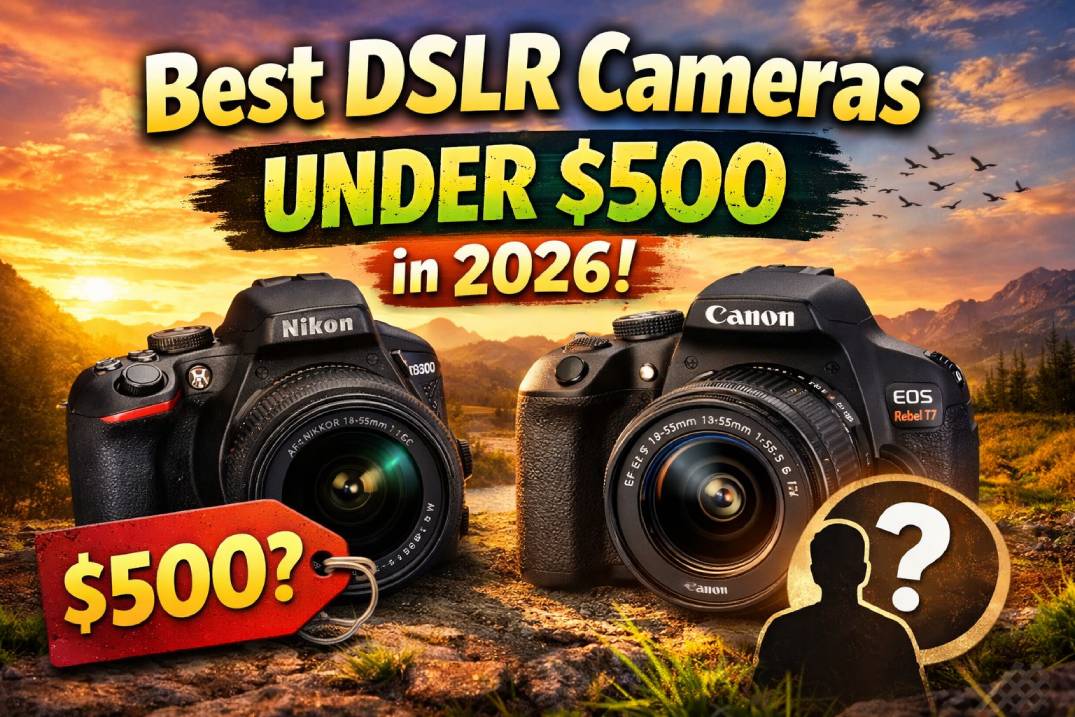
Canon EOS Rebel T7 (EOS 2000D)
Still one of the most accessible DSLRs for beginners, the Rebel T7 offers a 24.1MP sensor, simple controls, and reliable photo output. It’s especially popular for casual photography, blogging, and learning manual mode.
Nikon D3500
The D3500 continues to stand out for its excellent battery life and intuitive Guide Mode. For beginners who want to understand photography basics step by step, this camera remains a top recommendation in 2026.
Canon EOS Rebel T6 (EOS 1300D)
Although older, the Rebel T6 is still relevant for basic photography needs. Its straightforward interface and compatibility with Canon EF and EF-S lenses make it a practical entry-level option.
Nikon D3300
Known for strong sensor performance, the D3300 delivers impressive detail and solid low-light results. It’s often recommended for users who prioritize image quality over modern connectivity features.
DSLR vs Mirrorless Under $500 in 2026
This is where many buyers hesitate. Entry-level mirrorless cameras now exist in the same price range, but compromises are common.
Mirrorless models under $500 often have:
- Shorter battery life
- Limited lens availability
- Slower autofocus in low-end models
DSLRs, by contrast, offer consistency and reliability, especially for photography-focused users. If your main goal is learning photography rather than video creation, a DSLR still holds its ground in 2026.
Limitations You Should Accept
Being honest about limitations helps avoid disappointment.
- Video features are basic (usually Full HD only)
- Autofocus systems are simple
- Designs may feel dated
However, these limitations rarely affect beginners. In fact, fewer automated features often encourage better learning habits and creative control.
Who Should Buy a DSLR Under $500 in 2026?
This category is best suited for:
- Beginners learning photography fundamentals
- Students or hobbyists with limited budgets
- Content creators focused on still photography
- Users upgrading from smartphones
If advanced video, vlogging, or fast action tracking is your priority, mirrorless options at higher budgets may be better.
In 2026, choosing the best DSLR cameras under $500 is less about chasing trends and more about understanding value. These cameras may not represent the future of camera technology, but they remain excellent tools for learning, practicing, and enjoying photography.
For beginners who want dependable image quality, long battery life, and access to affordable lenses, a budget DSLR is still a smart and practical choice.
Frequently Asked Questions (FAQ)
1. Are DSLR cameras under $500 outdated in 2026?
Not necessarily. While DSLR development has slowed, their core technology is mature and reliable. For photography-focused users, especially beginners, the image quality and usability of budget DSLRs remain more than sufficient in 2026.
2. Is buying a used DSLR under $500 safe in 2026?
Yes, as long as you check key factors such as shutter count, physical condition, and seller credibility. Many DSLRs are designed to last for years, and buying used often allows access to better models within the same budget.
3. Can a DSLR under $500 still outperform smartphones?
In many scenarios, yes. DSLRs offer larger sensors, true optical lenses, and manual controls that smartphones can’t fully replicate. While phones excel in convenience, DSLRs still deliver superior creative flexibility and image depth.