A great photograph begins long before editing software enters the equation. It starts with the camera sensor, lens quality, dynamic range, color accuracy, and the ability to capture fine details exactly as they appear. While mirrorless systems continue to dominate headlines, many photographers still trust DSLRs when ultimate image quality matters.
The best DSLR camera for picture quality isn’t necessarily the newest model on the market. Instead, it’s the camera that consistently produces sharp details, natural colors, impressive low-light performance, and files flexible enough for professional editing. For landscape photographers, portrait artists, wildlife enthusiasts, and commercial creators, image quality remains the deciding factor.
Choosing the right DSLR can dramatically improve the final result. Better sensors preserve highlights and shadows, advanced autofocus systems ensure critical sharpness, and premium optics help reveal textures that smaller systems often miss. That’s why many professionals continue to rely on DSLRs even in an increasingly mirrorless world.
Best DSLR Camera For Picture Quality and Sensor Performance
When discussing image quality, sensor performance sits at the center of the conversation. Resolution alone doesn’t tell the whole story. Dynamic range, color depth, signal-to-noise ratio, and low-light capability often have a greater impact on real-world photography.
Among full-frame DSLRs, the Nikon D850 remains one of the most respected cameras ever produced. Its 45.7-megapixel sensor delivers extraordinary detail while maintaining excellent dynamic range. Landscape photographers appreciate the ability to recover shadows without introducing excessive noise, while studio professionals benefit from exceptional color reproduction.
Canon’s EOS 5DS R also deserves attention. Featuring a 50.6-megapixel full-frame sensor, it produces incredibly detailed files suitable for large-format printing and commercial work. The camera excels in controlled lighting situations where maximum resolution becomes the priority.
For photographers seeking balanced performance, the Canon EOS 5D Mark IV continues to be a strong contender. It combines excellent image quality, reliable autofocus, and versatile handling in a package trusted by wedding, portrait, and event professionals worldwide.
A good DSLR camera that still delivers stunning results proves that sensor technology and optical quality often matter more than chasing every new release.
DSLR Cameras With the Best Image Quality for Professional Photography
Professional photographers evaluate image quality differently than casual users. They need files that withstand aggressive editing, large prints, and demanding client expectations.
The Nikon D850 frequently ranks at the top because of its exceptional balance between resolution and dynamic range. Images appear crisp without looking artificial. Fine textures in landscapes, architecture, and fashion photography remain intact even after extensive post-processing.
The Pentax K-1 Mark II offers another compelling option. Its full-frame sensor and Pixel Shift Resolution technology create remarkably detailed images under the right conditions. Color rendition is particularly impressive, producing natural tones that require minimal correction.
Meanwhile, Canon’s EOS-1D X Mark III focuses less on megapixels and more on image consistency. Sports and wildlife photographers benefit from outstanding high-ISO performance, allowing clean images in situations where light becomes a challenge.
For newcomers who want to develop professional skills without investing heavily, a DSLR camera for beginners can provide an excellent foundation while still delivering impressive image quality.
Full-Frame DSLR Camera Image Quality Compared to APS-C Models
Full-frame cameras generally produce superior image quality because of their larger sensors. They gather more light, create smoother background blur, and maintain better performance at higher ISO settings.
However, APS-C DSLRs should not be underestimated. Cameras such as the Nikon D500 and Canon EOS 90D produce outstanding results when paired with quality lenses. In good lighting conditions, many viewers would struggle to identify whether an image came from a full-frame or APS-C sensor.
The real advantage of full-frame becomes noticeable in challenging environments. Night photography, indoor events, and high-contrast scenes often reveal the additional dynamic range and noise control offered by larger sensors.
Photographers entering the DSLR market may find value in classic models such as the Nikon D3200 DSLR Camera, which continues to surprise users with image quality far beyond its age and price category.
Likewise, the Canon EOS Rebel T6i DSLR Camera remains a capable entry-level option for photographers who prioritize affordability without sacrificing image clarity.
The reality is simple: a skilled photographer using a good APS-C DSLR will often outperform an inexperienced user carrying the most expensive full-frame camera available.
Many photographers looking for exceptional image quality continue to consider the Nikon D850 DSLR Camera one of the strongest investments available, thanks to its remarkable balance of resolution, dynamic range, and professional-grade performance.
FAQ DSLR Image Quality
1. What DSLR camera currently offers the best picture quality overall?
For many photographers and reviewers, the Nikon D850 remains one of the best DSLR cameras ever made for image quality. Its combination of high resolution, exceptional dynamic range, excellent color depth, and strong low-light performance creates files suitable for landscapes, portraits, commercial work, and fine art printing. While some newer cameras offer advanced features, few DSLRs have matched the overall image quality balance delivered by the D850.
2. Is a full-frame DSLR always better than an APS-C DSLR for picture quality?
Not always. Full-frame sensors generally provide better dynamic range, improved low-light performance, and shallower depth of field. However, modern APS-C cameras can produce excellent images, especially in good lighting conditions. Lens quality, photographer skill, exposure technique, and post-processing often influence the final image more than sensor size alone. Many APS-C DSLRs remain capable of producing professional-level results.
3. Does higher megapixel count automatically mean better image quality?
Higher megapixels increase the amount of detail captured, but they do not automatically guarantee better image quality. Factors such as sensor design, dynamic range, noise control, color science, and lens sharpness play equally important roles. A well-designed 24MP camera can often outperform a poorly optimized 50MP camera in real-world shooting situations. Image quality depends on the entire photographic system rather than resolution alone.
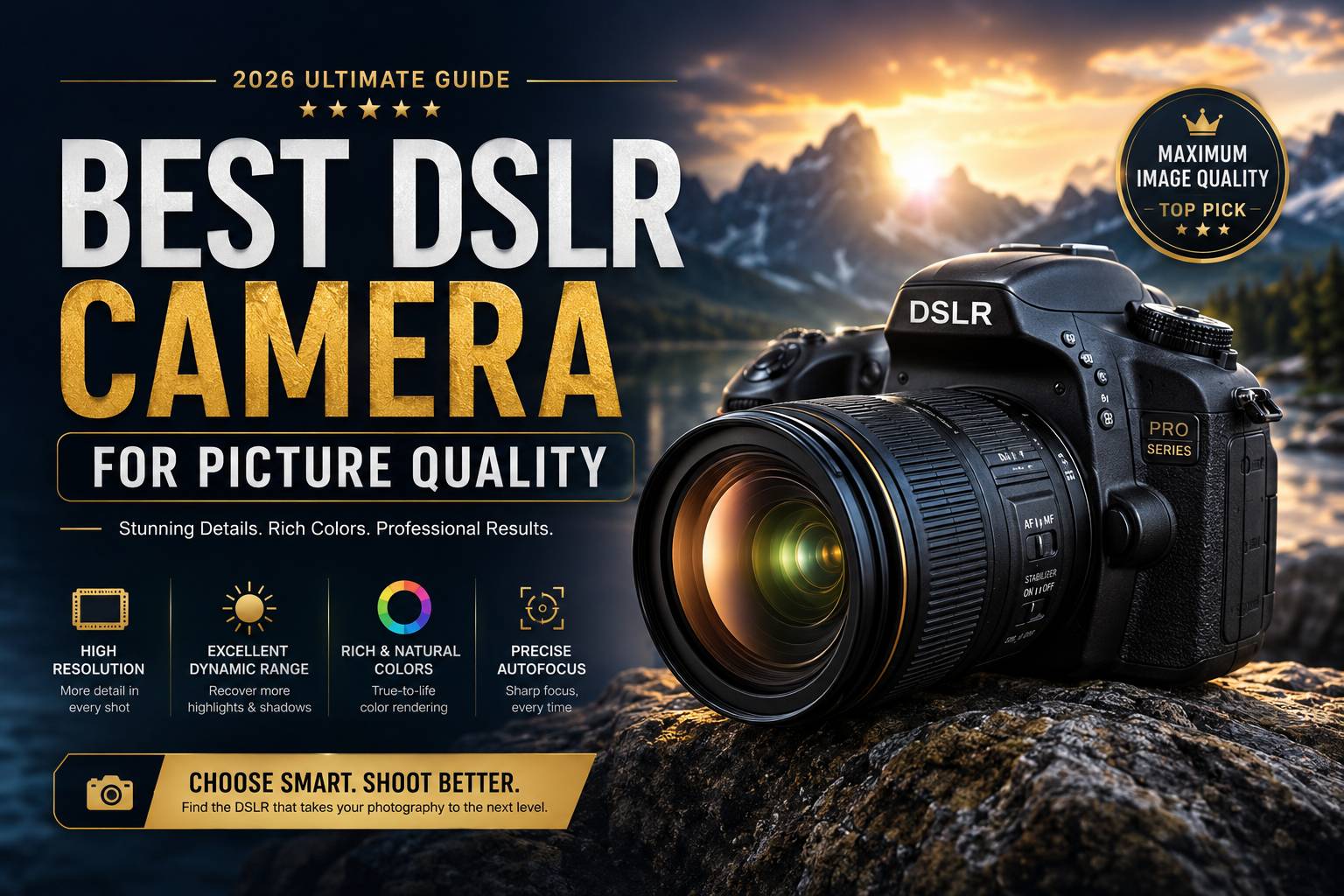
Finding the best DSLR camera for picture quality ultimately depends on photographic goals, budget, and shooting style. The Nikon D850 remains one of the strongest all-around choices thanks to its extraordinary detail and dynamic range. Canon’s professional DSLR lineup continues to offer excellent color reproduction and reliability, while Pentax provides unique advantages for photographers who value image precision.
The camera body matters, but the lens attached to it often matters even more. Pairing a capable DSLR with high-quality optics unlocks the level of sharpness, color accuracy, and detail that transforms a good image into a memorable one. In an era filled with rapid technological change, a great DSLR still proves that outstanding image quality never goes out of style.